


23 National Priority Areas for Ecological Corridors

Close

Explore this interactive map by turning on additional layers in the Filters below, and by moving and zooming in and out of the map to find areas of interest. Icons on the map link to more information about the area or region selected. Filter layers can be turned off and on in any combination. To learn more about each layer, please see the Legend below the map.

Map Filters
Control what you see on the map
GO TO LEGEND
Legend and Filters
Legend
National priority area

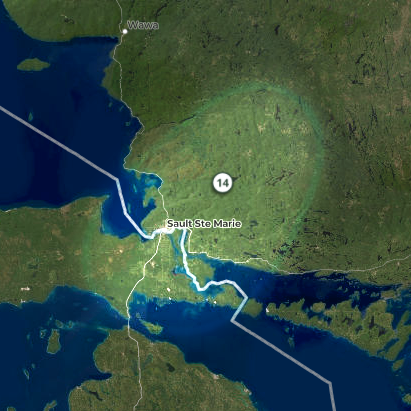
National Priority Areas for Ecological Corridors (NPAEC) are places where restoring or conserving connectivity is most needed in Canada. NPAECs are not corridors themselves, but priority areas for creation of ecological corridors.  There could be many individual corridors with each priority areaIn other words, they are areas where ecological corridors are most needed when looking at the vast landscape.

Data source: Parks Canada
Storymap

Dive into the interactive and in-depth StoryMaps created by Canadian Geographic Education. New StoryMaps are created throughout the year, so sign up to our newsletter to be notified.
Northern Limit

Ecological corridors are one of the tools in the nature conservation toolbox. They are most useful where natural habitats are highly fragmented by human use. In the northern regions of Canada, human impact is much lower, and habitat fragmentation is very low. In those places, protecting large intact blocks of land might be a better conservation strategy than ecological corridors.

Data source: Locke et al (2019)
Methodology: Parks Canada.
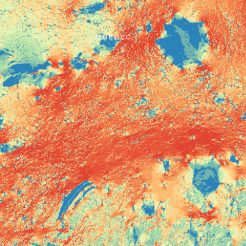
Probability of movement

This layer represents a measure of how probable it is for an animal to move through a certain area. Cities and farms are risky for animals to move through and therefore less likely to be used by wildlife than forests or other natural habitats. High probability, shown as orange and red on the map, means that the area could be important for animal movement across landscapes.

Data source. Areas Important for Ecological Connectivity Throughout Canada
Scientific paper Predicting areas important for ecological connectivity throughout Canada (2023)
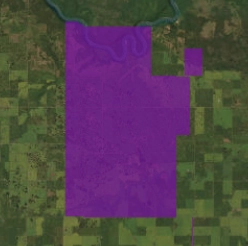
First Nation REserve Parcel

Data source: First Nation Reserve (2020)
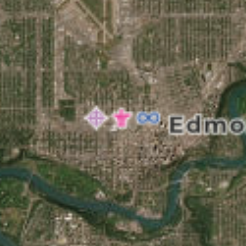
Cities/Towns with Significant Indigenous PopuLations

This data was drawn from the 2016 Census, and the criteria for determining a “significant” population are as follows:

  • First Nations: > 2000 people
  • Métis: > 1000 people
  • Inuit > 200 people
Canadian geographic Story

Explore stories of ecological connectivity and corridor projects from coast to coast to coast through in-depth reporting by Canadian Geographic. New stories are added throughout the year, so sign up to our newsletter to be notified.
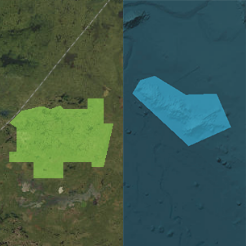
Protected area

Protected areas safeguard biodiversity, ecosystems and ecosystem services by reducing stresses from human activities. They can also provide opportunities for people to connect with nature. Protected areas include national, provincial and territorial parks, Indigenous protected areas, national wildlife areas, migratory bird sanctuaries and marine protected areas.

Data source: Canadian Protected and Conserved Areas Database (2023)
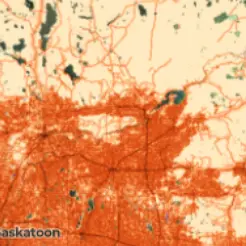
Human footprint

The human footprint is a measure of how strong an impact humans have on the land. Cities, industrial sites and farms have a high human footprint, while protected areas and natural habitats have low human footprint. Areas with high human footprint are places where ecological corridors are most useful as they increase the likelihood of safe passage across areas of high human development.

Data source: The Canadian Human Footprint (2022)
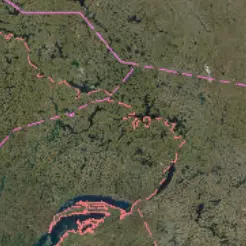
Treaty Boundaries

Treaties are agreements made between the Government of Canada, Indigenous groups and often provinces and territories that define ongoing rights and obligations on all sides. Treaties with Indigenous peoples include both historic treaties with First Nations and modern treaties, also called comprehensive land claim agreements with Indigenous groups. The boundaries shown here delineate the final negotiated area of each treaty or land claim.

Data source: Modern Treaties (2023)
Historic Treaties (2022)
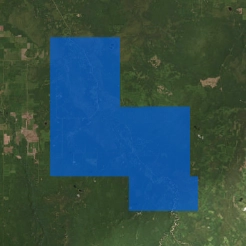
Métis settlement land

Data source: Métis Settlement (2024)

  • Treaty boundaries
  • Reserves
  • Cities/towns with significant indigenous populations
Close

Privacy Policy

Thank you for your interest in our magazine and other services. Your privacy is very important to us and we believe in giving you full disclosure about the kinds of information we gather and what we do with it. We also want to give you a choice about the use of your personal information.

Personally identifiable information

This is information you may have given us specifically about who you or your gift recipients are, such as:

We may use the information in these ways:

We use your name and address (postal and/or email) in order to deliver the product, information or service you requested and to follow up with you about the transaction (i.e., send a bill, notify you that your subscription is expiring, etc.). We may also send you further information about the publication, its offers, or other products produced under its name. We use the information you provide us about others to send them your gifts of subscriptions or products.

Occasionally, our magazines or websites may make their list of customers available to other carefully screened organizations that want to let you know about a product or service that might interest you. The material to be sent to you or your gift recipient is reviewed by us before the names and addresses are released to ensure the materials are appropriate. If you wish to know what list your name came from, we will make every reasonable effort to determine the source and provide you with the information. If you would prefer for us NOT to share your information, simply inform us (see “Contact Us” below).

Your credit card number, debit card number, or banking information for pre-authorized payments is used only for processing payments and for presenting you with payment options — not for marketing purposes.

Anonymous/aggregated information

This is information that cannot identify you, such as:

Control of your information

You always have the option to instruct us not to use your name, address, e-mail address, etc. beyond providing you with the product, information or service you requested. See “Contact Us” below.

E-mail communications will always include an “Unsubscribe” option.

We regularly use the Canadian Marketing Association “do not mail/do not call” service to remove customers from marketing campaigns. To add your name to this list, see “Canadian Marketing Association” below.

Security

We make every reasonable effort to protect against the loss, misuse, and alteration of personal information under our control. Our security policies are periodically reviewed and enhanced as necessary.

Only authorized individuals and suppliers have access to customer information. Where information is sent to a third party for processing, we make sure, through our contracts with them, that all customer information is kept secure. We keep your information for the time we are providing you with a product or service, and for a reasonable time thereafter in the event that you wish to resume service.

We operate secure data networks protected by industry standard firewall and password protection systems. Credit card information is processed using industry-standard encryption and security. We do not collect personal information from bulletin boards or forums. However, we cannot guarantee that personal information voluntarily disclosed on message boards and discussion groups will not be collected and used by others, which may result in unsolicited messages to you from other parties.

Contact Us

You may contact Canadian Geographic Enterprises regarding privacy matters in any one of the following ways:

E-mail: [email protected]

Mail:
Canadian Geographic
Privacy Officer
50 Sussex Drive
Ottawa, ON
K1M 2K1

Telephone: (613) 745-4629
Fax: (613) 744-0947

Canadian Marketing Association

We are a member of the Canadian Marketing Association (CMA), and abide by its Code of Ethics and Standards of Practice, including its Internet privacy policy.

Call the CMA at 416-391-2362 or visit their online Consumer Centre for more information on inclusion in their “do not mail/do not call” lists and for comprehensive online information.

Updates

From time to time, we may update our privacy statement. Please review this policy periodically.

Copyright

No part of this website may be reproduced in any form without the express written consent of Canadian Geographic Enterprises.

Close

Contact Us

This field is for validation purposes and should be left unchanged.